
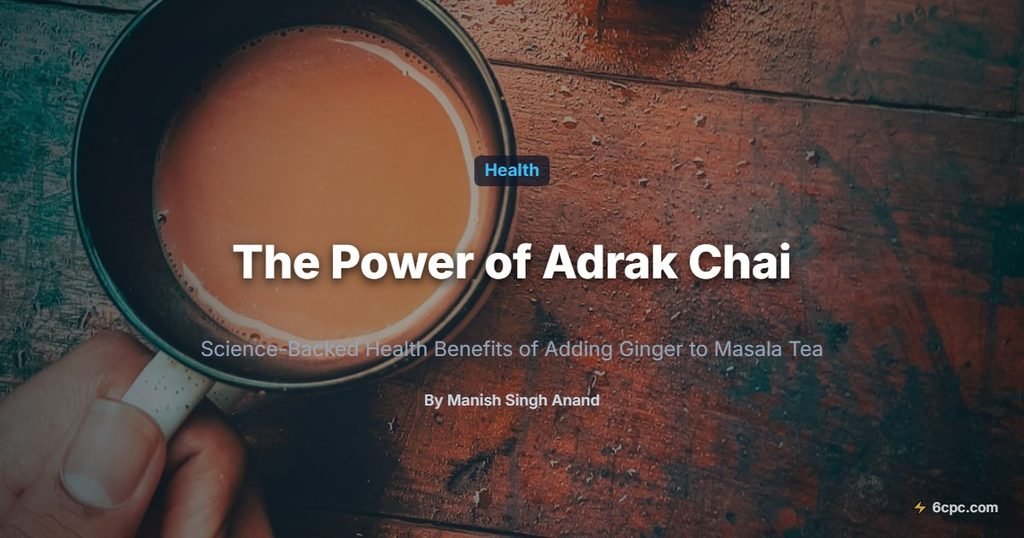
In millions of households across the globe, morning does not officially begin without a hot, steaming cup of Masala Tea (spiced chai). While traditional chai incorporates a blend of fragrant spices like cardamom, cinnamon, and cloves, there is one humble root that elevates this traditional beverage from a comforting ritual to a potent medicinal elixir: Fresh Ginger (Adrak).
Adding fresh ginger to your daily masala tea isn’t just about achieving that signature sharp, warming bite. It triggers a remarkable synergy between black tea polyphenols and bioactive ginger compounds. At 6CPC, we focus on evidence-based wellness to help you Control metabolic markers, Purify your system, and Care for your long-term health.
In this deep dive, we explore the science-backed health benefits of ginger-infused masala tea, its impact on digestion and immunity, and how to brew the perfect medicinal cup.
1. The Chemistry of Synergy: Black Tea Meets Ginger
To understand why Adrak Masala Chai is so effective, we must look at its bioactive constituents.
Black tea leaves are rich in theaflavins and thearubigins—complex antioxidants formed during tea fermentation. When you crush fresh ginger into the boiling tea mixture, you introduce two powerful bioactive compounds:
- Gingerols: The primary aromatic oil present in fresh ginger root, responsible for its sharp taste and strong anti-inflammatory properties.
- Shogaols: Formed when ginger root is heated or dried. Shogaols possess even stronger antioxidant properties than gingerols, making hot tea the ultimate delivery method.
When combined with milk fat and black tea catechins, these compounds become more stable, allowing your body to absorb them more effectively through the digestive tract.
2. Top Science-Backed Health Benefits of Ginger Masala Tea
A. Revs Up Digestion & Relieves Bloating
In Ayurvedic medicine, ginger is referred to as Vishwabhesaj (the universal medicine) due to its ability to kindle Agni (digestive fire). Modern clinical studies confirm that ginger accelerates gastric emptying—the rate at which food leaves the stomach and enters the small intestine.
- Eases Indigestion: Ginger compounds stimulate digestive enzymes like lipase and trypsin.
- Prevents Bloating & Gas: The carminative properties of ginger break up trapped intestinal gas, preventing post-meal heaviness.
- Combats Nausea: Gingerols act on serotonin receptors in the gut, making ginger tea an effective natural remedy for morning sickness, motion sickness, and mild nausea.
B. Natural Anti-Inflammatory & Joint Pain Relief
Chronic inflammation is at the root of many modern health issues, including osteoarthritis, cardiovascular strain, and metabolic dysfunction.
Ginger functions as a natural COX-2 inhibitor, similar to non-steroidal anti-inflammatory drugs (NSAIDs). Regular consumption of ginger-infused masala tea helps reduce systemic inflammatory markers like C-reactive protein (CRP). For individuals suffering from joint stiffness or post-workout muscle soreness, a daily cup provides cumulative, natural pain relief without gastric side effects.
C. Bolsters Respiratory Health & Fights Cold/Flu
When seasonal changes bring nasal congestion, sore throats, and persistent coughs, ginger masala tea acts as a natural decongestant.
- Mucolytic Action: The warming nature of ginger helps break down thick mucus in the lungs and nasal passages.
- Antimicrobial Support: Gingerol exhibits active antibacterial and antiviral properties, helping suppress viral replication in the upper respiratory tract.
- Throat Soothing: The combination of hot liquid, steam, ginger heat, and added spices coats raw throat tissue, providing instant comfort.
       +-------------------------------------------------------+
       |             GINGER MASALA TEA SYNERGY                 |
       +-------------------------------------------------------+
       | • Gingerol + Shogaol : Anti-inflammatory & Pain Relief|
       | • Tea Polyphenols    : Vascular Protection            |
       | • Cardamom + Cinnamon: Blood Sugar Regulation          |
       | • Milk Lipids        : Enhanced Compound Absorption   |
       +-------------------------------------------------------+
D. Regulates Blood Sugar & Supports Metabolic Health
Emerging research highlights ginger’s ability to improve insulin sensitivity and support glucose regulation. Gingerols facilitate the uptake of glucose into muscle cells without requiring extra insulin.
When paired with traditional masala spices like cinnamon (which mimics insulin activity) and cardamom (which supports lipid metabolism), ginger masala tea becomes an excellent addition to a metabolic management lifestyle—provided it is prepared with minimal refined sugar.
E. Enhances Circulation & Heart Health
Ginger acts as a mild vasodilator, relaxing blood vessels and encouraging smooth blood flow throughout the circulatory system. Improved circulation ensures that oxygen and essential nutrients are efficiently delivered to vital organs.
Monitoring cardiovascular metrics like Mean Arterial Pressure (MAP) is essential for long-term health. The combination of black tea flavonoids and ginger compounds helps inhibit platelet aggregation (blood clotting) and supports healthy vascular resistance.
3. How to Brew Therapeutic Ginger Masala Tea
To extract maximum medicinal value from your ingredients, the brewing technique matters. Simply dropping sliced ginger into pre-made tea will not yield the same therapeutic benefit as proper extraction.
Ingredients (Serves 2)
- 1.5 cups Water
- 0.5 cup Milk (Dairy or non-dairy like oat/almond milk)
- 1.5 tbsp Loose Black Tea Leaves (CTC or Assam tea)
- 1 inch Fresh Ginger Root (Grated or crushed)
- Crushed Spices: 2 green cardamom pods, 1 small cinnamon stick, 2 black peppercorns
- Unrefined sweetener: Jaggery, raw honey, or coconut sugar (optional)
Step-by-Step Preparation Protocol
- The Decoction Base: In a saucepan, add water, grated ginger, and crushed spices. Bring to a rolling boil over medium heat.
- Simmer for Extraction: Reduce heat and let the spices simmer for 3 to 5 minutes. This slow decoction extracts the volatile oils, gingerols, and shogaols into the water.
- Add Tea Leaves: Add the black tea leaves and simmer for another 2 minutes until the liquid turns dark and fragrant.
- Add Milk: Pour in the milk. Bring the mixture to a slow boil, allowing it to rise twice to blend the fats with the tea polyphenols.
- Strain & Sweeten: Strain the hot tea through a fine mesh sieve into mugs. If using raw honey, allow the tea to cool slightly before stirring it in to preserve honey’s beneficial enzymes.
4. Ginger Masala Tea Nutritional Comparison
| Feature | Plain Milk Tea | Plain Ginger Tea | Ginger Masala Tea |
| Antioxidant Variety | Moderate | High (Gingerols) | Very High (Synergistic) |
| Digestive Support | Low | High | Maximum (Carminative blend) |
| Anti-Inflammatory | Mild | Strong | Potent (Ginger + Cinnamon + Pepper) |
| Respiratory Relief | Minimal | Moderate | High (Decongestant) |
5. Precautions & Best Practices
While ginger masala tea is safe and beneficial for most people, keep the following in mind:
- Acidity Concerns: Drinking extremely strong, spicy ginger tea on an empty stomach may trigger mild heartburn in individuals prone to acid reflux or ulcers. Enjoy it alongside a light snack.
- Pregnancy: While ginger is excellent for morning sickness, limit raw ginger intake to under 1,500 mg per day and consult your healthcare provider regarding traditional herbal blends.
- Blood Thinners: Because ginger possesses mild blood-thinning properties, individuals taking anticoagulant medications should maintain moderate, consistent consumption rather than high therapeutic doses.
Final Thoughts
Adding fresh ginger to your daily masala tea transforms a humble beverage into an anti-inflammatory, immune-boosting, and digestive powerhouse. By taking a few extra minutes to crush and simmer fresh ginger root, you unlock a wealth of bioactive compounds designed by nature to protect your health.